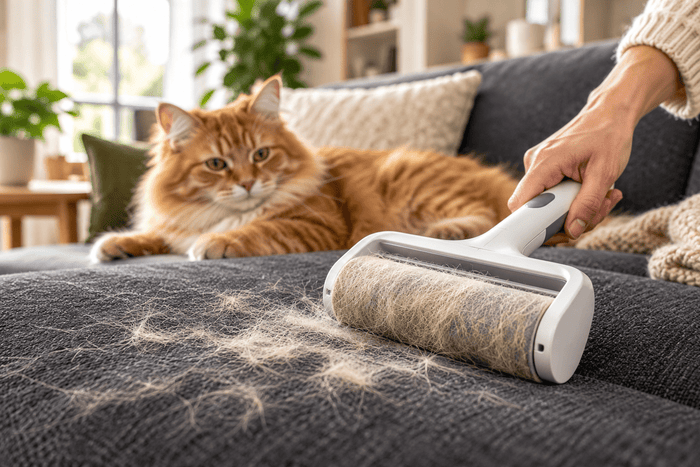
Self-Cleaning Pet Grooming Brush: Complete Guide to Shedding, Coat Types & Easy Grooming
Quick Answer
A self-cleaning pet grooming brush is a slicker-style grooming tool designed to collect loose fur while you brush and then release that fur with a button instead of making you pull it out of the bristles by hand.
The MeowWoof Self-Cleaning Pet Grooming Brush is designed for cats and dogs and is intended for regular at-home grooming. Its main practical advantage is simple: brush the pet, press the button, release the collected fur, and continue.
Why a Self-Cleaning Pet Brush Is Such a Useful Upgrade
If you have ever brushed a shedding dog or cat, you know the routine: brush the pet, fill the bristles with fur, stop brushing, and then spend another few minutes pulling that fur out by hand.
That cleanup step sounds minor until you repeat it several times a week. It makes grooming feel like two jobs instead of one.
A self-cleaning brush removes that annoying second step. The grooming itself does not magically become unnecessary, but the tool is easier to clear between passes and easier to put away when you finish.
That matters because a grooming routine only helps if you actually keep doing it. Veterinary grooming guidance consistently emphasizes regular brushing as part of coat care, with the exact frequency depending on coat type and the individual pet.
What Are You Really Buying This Brush For?
Brush shedding hair out of the coat before more of it ends up around the home.
Release collected hair with the one-click cleaning mechanism.
A simpler cleanup step removes one of the little annoyances of regular grooming.
Have a straightforward tool ready for routine coat maintenance.
Collect fur during grooming instead of waiting for all of it to reach furniture and clothing.
Brush, release, continue. That small difference can make the whole routine feel easier.
What Is a Self-Cleaning Slicker Brush?
A self-cleaning slicker brush uses fine grooming pins to lift loose hair and work through minor surface tangles while brushing. A release mechanism then moves the collected fur away from the pins so it can be removed more easily.
Current 2026 buying guides continue to place self-cleaning slickers among the most practical everyday grooming options for dogs and cats, particularly when easy fur release is a priority.
The key word is minor. A slicker brush is not a magic mat remover, and a self-cleaning button does not change what the bristles are designed to do.
How the One-Click Cleaning Mechanism Works
- Brush through the coat and allow the bristles to collect loose hair.
- When the brush is sufficiently covered, stop brushing.
- Press the cleaning/release button.
- The collected hair is released from the brush head.
- Dispose of the fur and continue grooming if necessary.
The benefit is not that the brush performs grooming automatically. The benefit is that the cleanup between grooming passes becomes much faster and less hands-on.
Self-Cleaning vs. Regular Pet Brush
| Feature | Self-cleaning brush | Traditional brush |
|---|---|---|
| Loose-fur removal | Yes, as part of brushing | Yes, depending on brush type |
| Hair cleanup | One-click release | Usually manual |
| Best advantage | Convenience and repeatability | Depends on brush design |
| Heavy mat removal | Not its primary job | Not necessarily its primary job |
Is It Really a Deshedding Brush?
It can help remove loose fur, but “deshedding” is a broad marketing term. Different tools work differently.
A slicker-style brush is generally an everyday grooming tool that can collect loose hair and work through minor tangles. Dedicated undercoat/deshedding tools are designed differently and may be more appropriate for certain heavily shedding double-coated breeds.
Current coat-care guides emphasize matching the tool to the coat rather than assuming one brush is best for every dog or cat.
That is why this guide is deliberately not promising that one brush will replace every grooming tool.
Which Dogs Can Benefit From It?
The product is designed for dogs with short, medium or long hair, with the exact experience depending on coat density, length and condition.
- Dogs that shed loose fur around the home.
- Dogs that tolerate regular brushing.
- Medium- and long-haired dogs needing routine coat maintenance.
- Many everyday short-haired dogs that benefit from gentle brushing.
- Owners who want easier cleanup after grooming.
Which Cats Can Benefit From It?
The same basic idea applies to cats: collect loose hair during grooming and make the brush easier to clear afterward.
Self-cleaning slicker brushes are widely used as everyday cat-grooming tools, especially for medium and long coats.
However, cats vary enormously in grooming tolerance. If your cat dislikes brushes, begin with very short sessions and stop before the cat becomes distressed.
Short Hair vs. Medium Hair vs. Long Hair
| Coat | What to expect | Important note |
|---|---|---|
| Short | Can collect loose surface fur | A rubber curry or grooming glove may also be preferred by some pets |
| Medium | Useful for routine brushing and loose-fur collection | Brush gently and work in sections |
| Long | Can help with loose fur and minor tangles | Severe mats need a different approach and may require professional help |
| Dense double coat | Can be useful for maintenance | A dedicated undercoat tool may be better during heavy seasonal shedding |
How to Brush a Dog Correctly
- Choose a calm moment. A relaxed dog is easier to groom than one that is already excited.
- Start with a small area. Do not immediately attack the whole coat.
- Brush in the direction of the coat. Use controlled, gentle strokes.
- Watch the skin. Avoid repeatedly pressing hard in one spot.
- Clear the brush when it fills. Use the release mechanism instead of continuing with a packed brush.
- Finish before your dog becomes frustrated. Several short positive sessions can be better than one long struggle.
Professional veterinary guidance emphasizes regular brushing and gentle handling rather than aggressive brushing or forcing a pet through a grooming session.
How to Brush a Cat Without Turning It Into a Battle
- Let the cat investigate the brush first.
- Start with a few gentle strokes on an area the cat already likes being touched.
- Keep the first sessions short.
- Reward calm behavior.
- Stop if the cat becomes stressed, aggressive or clearly uncomfortable.
- Gradually extend the session only if the cat remains relaxed.
The goal is not to “win” a grooming session. The goal is to create a routine the cat will tolerate repeatedly.
How Often Should You Brush Your Pet?
There is no single correct number of sessions for every dog or cat. Coat type, length, shedding level, lifestyle and tolerance all change the answer.
Longer or more easily tangled coats generally need more frequent attention than short coats. Heavy seasonal shedding may also require increased grooming.
Start with a manageable routine and adjust based on what you see: loose fur, tangling, coat condition and your pet's comfort.
What About Mats?
A self-cleaning slicker can help with minor tangles, but tightly compacted mats are different.
Do not repeatedly scrape at a tight mat or use scissors close to the skin. Mats can pull on the skin and may require professional grooming or veterinary assistance, especially when they are extensive or the skin underneath is irritated.
This is one of the most important limits of any everyday grooming brush.
Self-Cleaning Brush vs. Deshedding Tool
These are not necessarily the same thing.
Self-cleaning slicker: everyday brushing, loose fur, minor tangles and easy cleanup.
Undercoat/deshedding tool: designed more specifically to remove loose undercoat from suitable coats.
Grooming glove: useful for pets that prefer the sensation of being petted rather than brushed.
Comb: useful for checking and finishing certain coats, especially longer hair.
Current 2026 grooming comparisons make this distinction repeatedly: the coat should determine the tool rather than the marketing label alone.
Why the One-Click Release Actually Matters
At first glance, the cleaning button can look like a gimmick. In everyday use, it solves a very specific problem.
Imagine brushing a shedding dog for ten minutes. The brush fills. You stop. You pull fur from between dozens of pins. You start again. Repeat.
With a self-cleaning mechanism, the interruption becomes much shorter. That means you can spend more of the session actually brushing and less time maintaining the tool.
It is a small feature, but small friction points are often what determine whether a routine gets repeated.
What the MeowWoof Brush Is Designed to Do
| Feature | Practical use |
|---|---|
| Self-cleaning mechanism | Releases collected fur with one press. |
| Pet grooming brush | Designed for routine brushing of dogs and cats. |
| Loose-fur removal | Collects loose hair during grooming. |
| Short, medium and long hair | The current product listing describes use across these hair lengths. |
| Dogs & cats | One grooming tool for both species. |
| Price | $18.95 at the time this guide was prepared. |
How to Make Grooming More Effective
- Brush before loose fur accumulates throughout the house.
- Use short, controlled strokes instead of aggressive brushing.
- Work in sections on longer coats.
- Clear the brush before the pins become overloaded.
- Keep sessions positive and predictable.
- Use another grooming tool when your pet's coat requires one.
- Clean and inspect the brush regularly.
What This Brush Cannot Promise
A good guide should say this clearly.
- It cannot stop a dog or cat from shedding completely.
- It cannot replace every type of grooming tool.
- It cannot safely remove every severe mat.
- It cannot guarantee that every pet will enjoy brushing.
- It does not diagnose skin or coat problems.
- “Self-cleaning” does not mean sterilizing or disinfecting the brush.
The realistic goal is much more useful: make routine loose-fur grooming simpler and make the brush easier to clean.
Signs You Should Stop Grooming and Get Professional Help
Talk to a veterinarian or qualified professional if you notice significant skin irritation, wounds, painful mats, sudden major changes in shedding, bald patches, persistent itching or a pet that appears painful when touched.
Grooming is maintenance, not a substitute for diagnosing a medical problem.
Common Mistakes With Self-Cleaning Brushes
1. Brushing too hard
More pressure does not automatically mean more loose fur. Use controlled strokes and pay attention to the skin.
2. Treating the brush as a mat remover
Tight mats can require professional attention. Do not force a brush through a painful, compacted mat.
3. Waiting until the pet is covered in knots
Regular maintenance is generally easier than trying to solve a neglected coat in one session.
4. Ignoring the pet's body language
If your dog or cat is repeatedly trying to escape, growling, scratching or showing obvious discomfort, change your approach rather than forcing the session.
5. Assuming every coat needs the same tool
A short-haired dog, a double-coated retriever and a long-haired cat can have very different grooming needs.
Is a Self-Cleaning Pet Brush Worth It?
If your biggest frustration is simply that your pet sheds, any brush that matches the coat can be useful. But if you already know that brushing works and your next frustration is the annoying cleanup afterward, a self-cleaning brush solves a very specific problem extremely well.
You brush the pet. The loose fur collects in the brush. You press the button. The collected hair releases. You continue.
That is the whole appeal—and it is precisely why this style of brush has become such a common recommendation in 2026 grooming guides.
Ready to Make Grooming Less of a Chore?
The MeowWoof Self-Cleaning Pet Grooming Brush is designed to collect loose fur from dogs and cats and release it with one press.
Frequently Asked Questions
What is a self-cleaning pet brush?
It is a grooming brush with a mechanism that releases collected fur from the bristles, usually with a button or similar control.
Does a self-cleaning brush remove loose fur?
Yes. The brush is designed to collect loose fur during grooming. How much it removes depends on the pet's coat and the grooming technique.
Is a self-cleaning brush good for dogs?
It can be useful for routine grooming on many dogs, especially when loose fur and easy cleanup are the main goals. The correct brush still depends on coat type.
Is a self-cleaning brush good for cats?
Yes, many cats can benefit from regular brushing, and self-cleaning slicker brushes are commonly used for routine cat grooming. Introduce the brush gradually if your cat is sensitive to grooming.
Can it remove mats?
It may help with minor tangles, but it is not a solution for tight or extensive mats. Severe matting may require a professional groomer or veterinarian.
Can I use it on short-haired pets?
The current MeowWoof listing describes the brush for short, medium and long hair. The exact result will depend on coat density and the individual pet.
Can I use it on a double-coated dog?
It can be useful for routine maintenance, but heavy seasonal undercoat shedding may call for a dedicated undercoat/deshedding tool as well.
How often should I brush my dog or cat?
There is no universal schedule. Coat type, length, shedding level and grooming tolerance all matter. Start with a manageable routine and adjust to your pet's needs.
Does self-cleaning mean the brush disinfects itself?
No. It means the collected hair is easier to release. The brush still needs normal cleaning and care.
Will it stop my pet from shedding?
No. Shedding is normal for dogs and cats. Grooming can help collect loose fur before it spreads, but it does not eliminate shedding.
Can it replace professional grooming?
No. It is an at-home grooming tool. Professional grooming may still be appropriate for difficult coats, severe mats or pets needing specialized care.
What is the main advantage of this brush?
The combination of routine loose-fur brushing and one-click hair release. You spend less time picking fur out of the brush by hand.
Related MeowWoof Guides
- Dog Grooming at Home: Complete Brushing, Bathing & Coat Care Guide
- How to Prevent Mats in Dogs
- How to Get Rid of Pet Hair at Home
- How to Remove Pet Hair From Your Home
Sources & Further Reading
- Vetstreet — Pet Grooming Brush Review and Veterinary Context
- PetPalHQ — Best Dog Brushes for Shedding, Mats and Coat Types
- PetPalHQ — Best Cat Brushes for Shedding, Mats and Hairballs
- ThePetBench — Shedding Brushes for Dogs and Cats
Educational information only. Dogs and cats differ in coat type, grooming tolerance and health needs. If grooming reveals pain, skin changes, wounds, severe matting or a sudden unusual change in shedding, consult a veterinarian or qualified grooming professional.